Good Practices Handbook
A Compilation of Wellbeing Practices for Youth Work
A compilation of nine good practices on wellbeing, mental health, connection and resilience in youth work. Four national practices from Italy, Spain, Bulgaria and Germany, four European practices and one international initiative from Australia show approaches that youth workers and youth organisations can learn from and adapt.
Open the publication as a Download PDF.
About this guide
This compilation was prepared within WELLCORE, a European strategic partnership between SCIARA (Italy), DEFOIN (Spain), Impact Drive (Bulgaria) and Highlights e.V. (Germany). Over 18 months, the partnership has worked on wellbeing, mental health, connection and resilience in youth work. One of its objectives is to share wellbeing resources and good practices, and this document brings those practices together in one place.
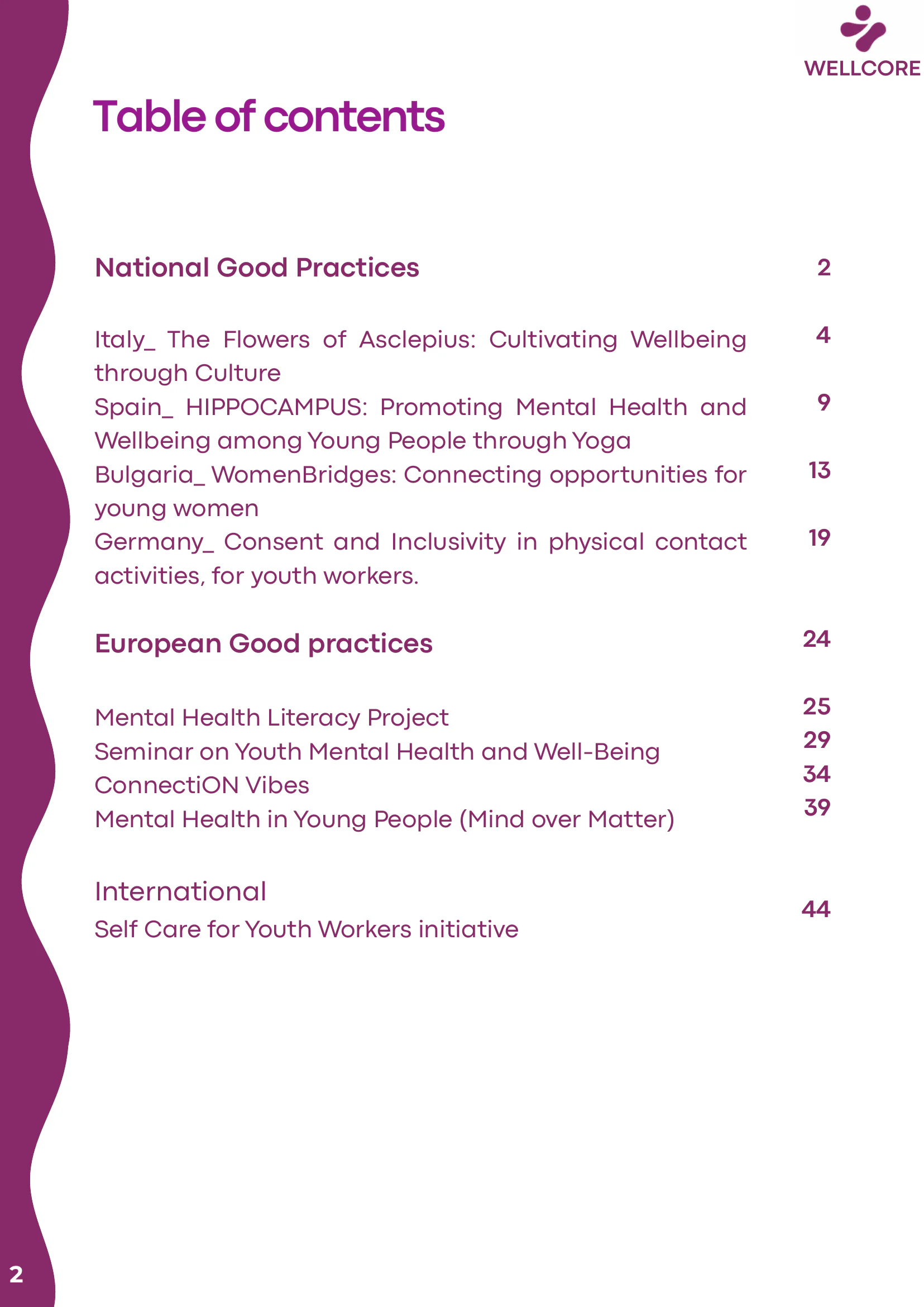
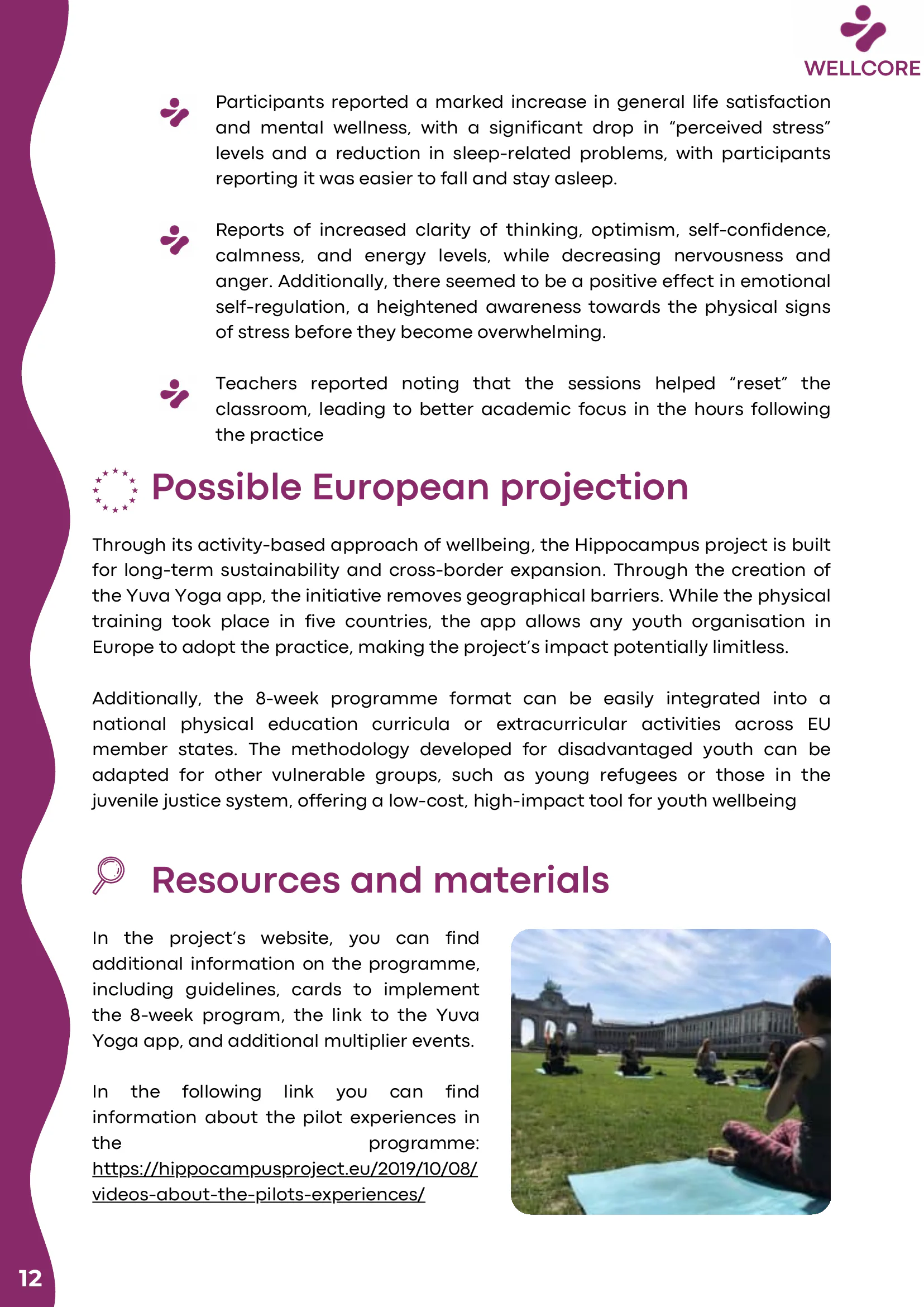
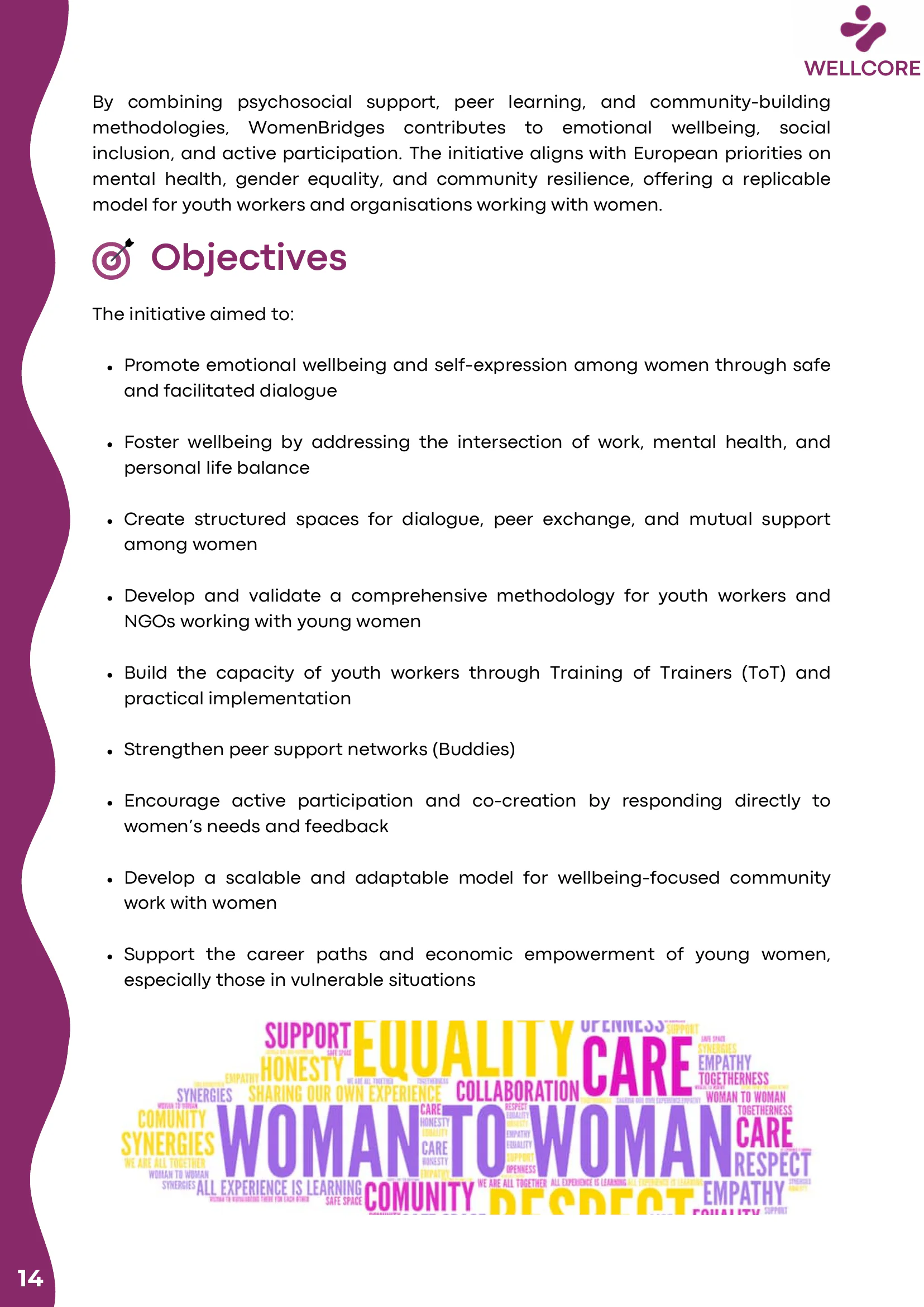
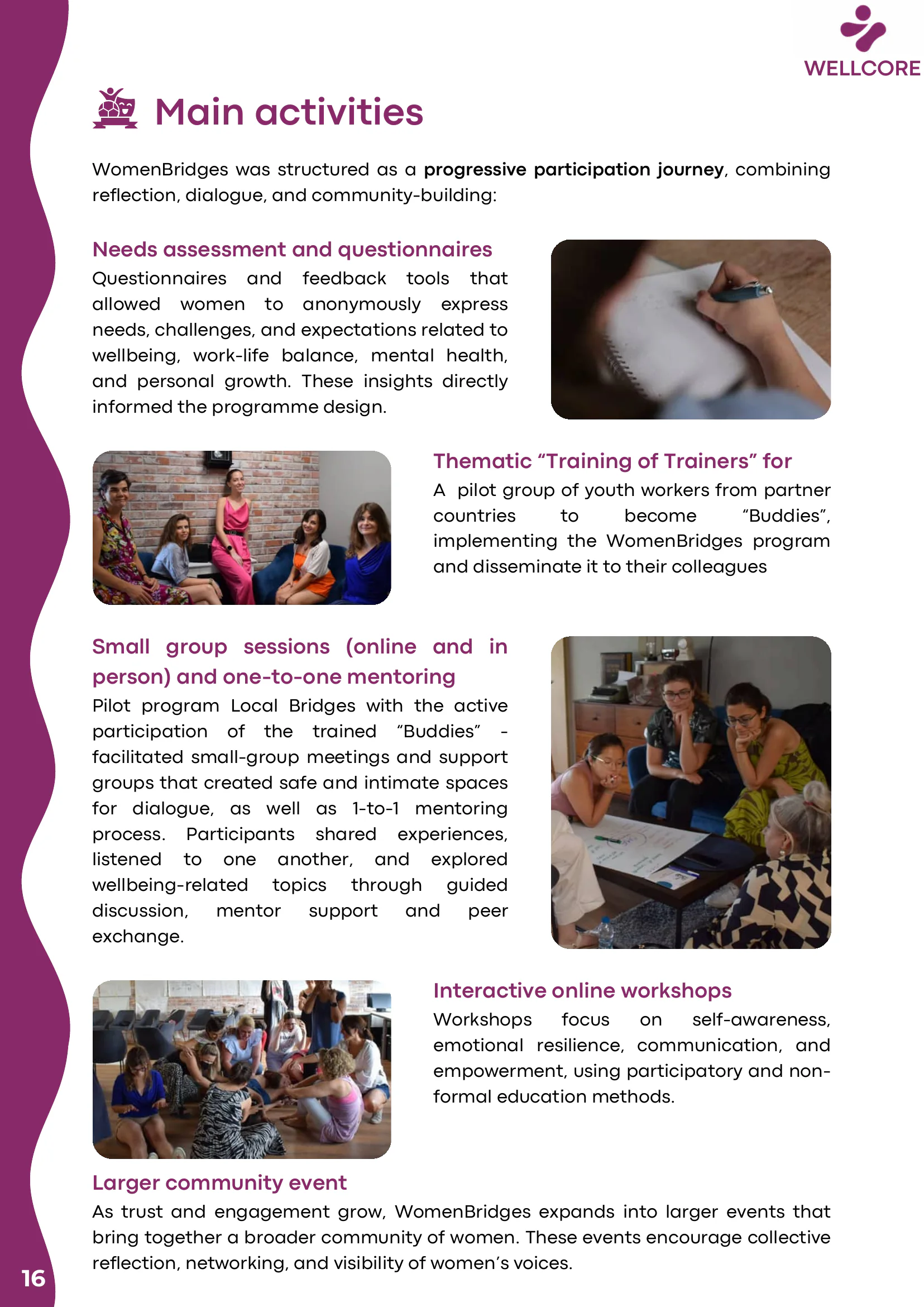
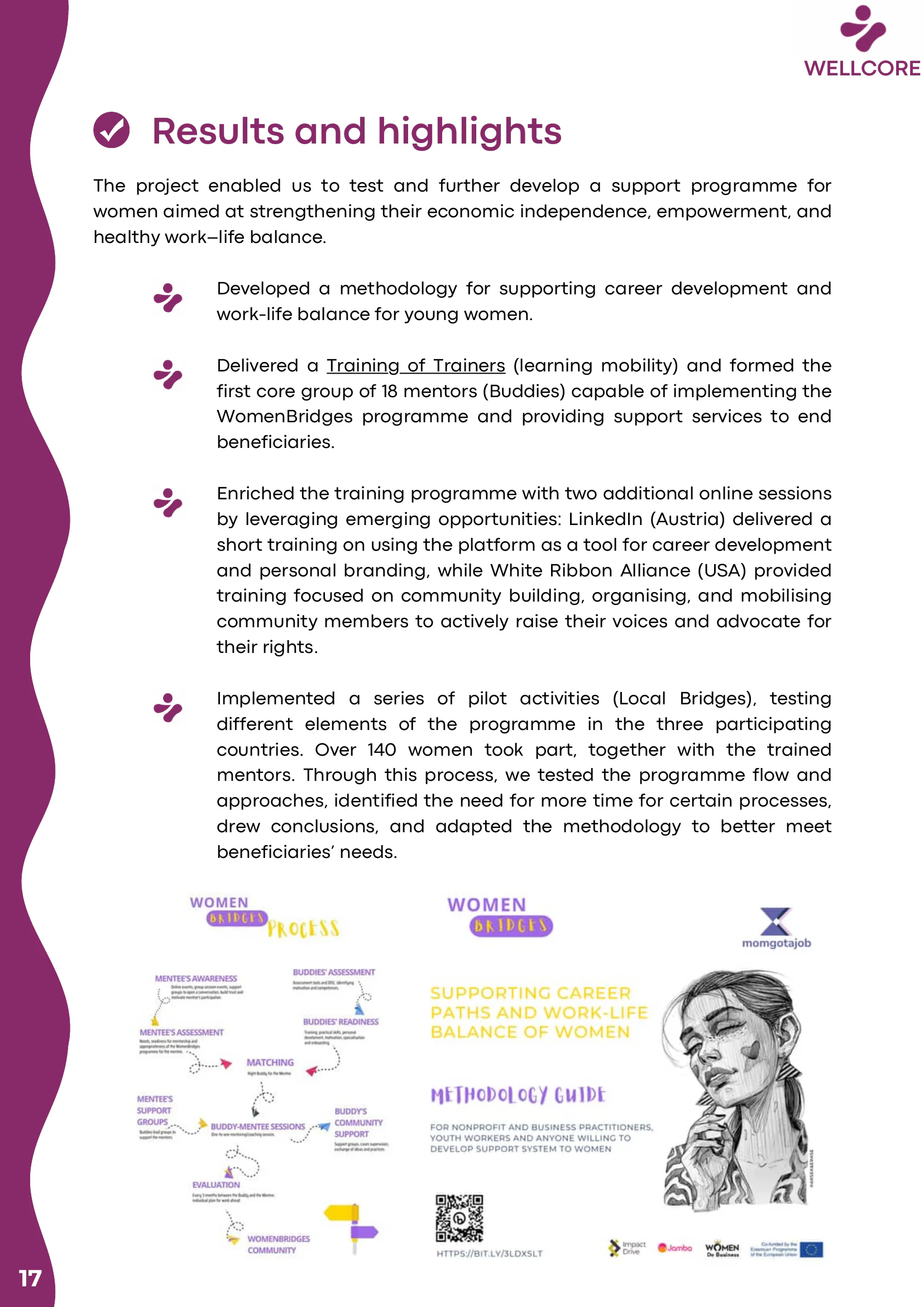
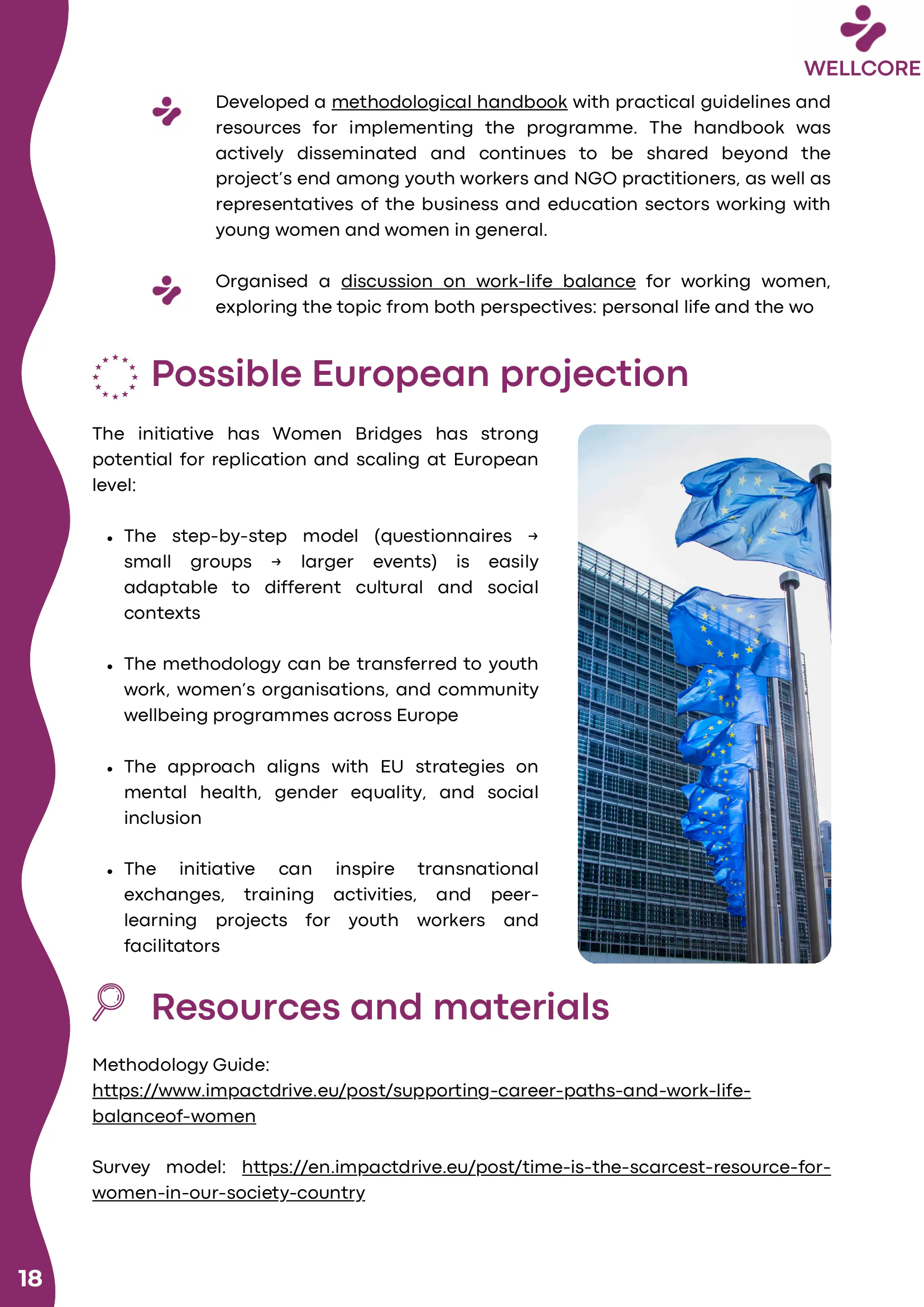
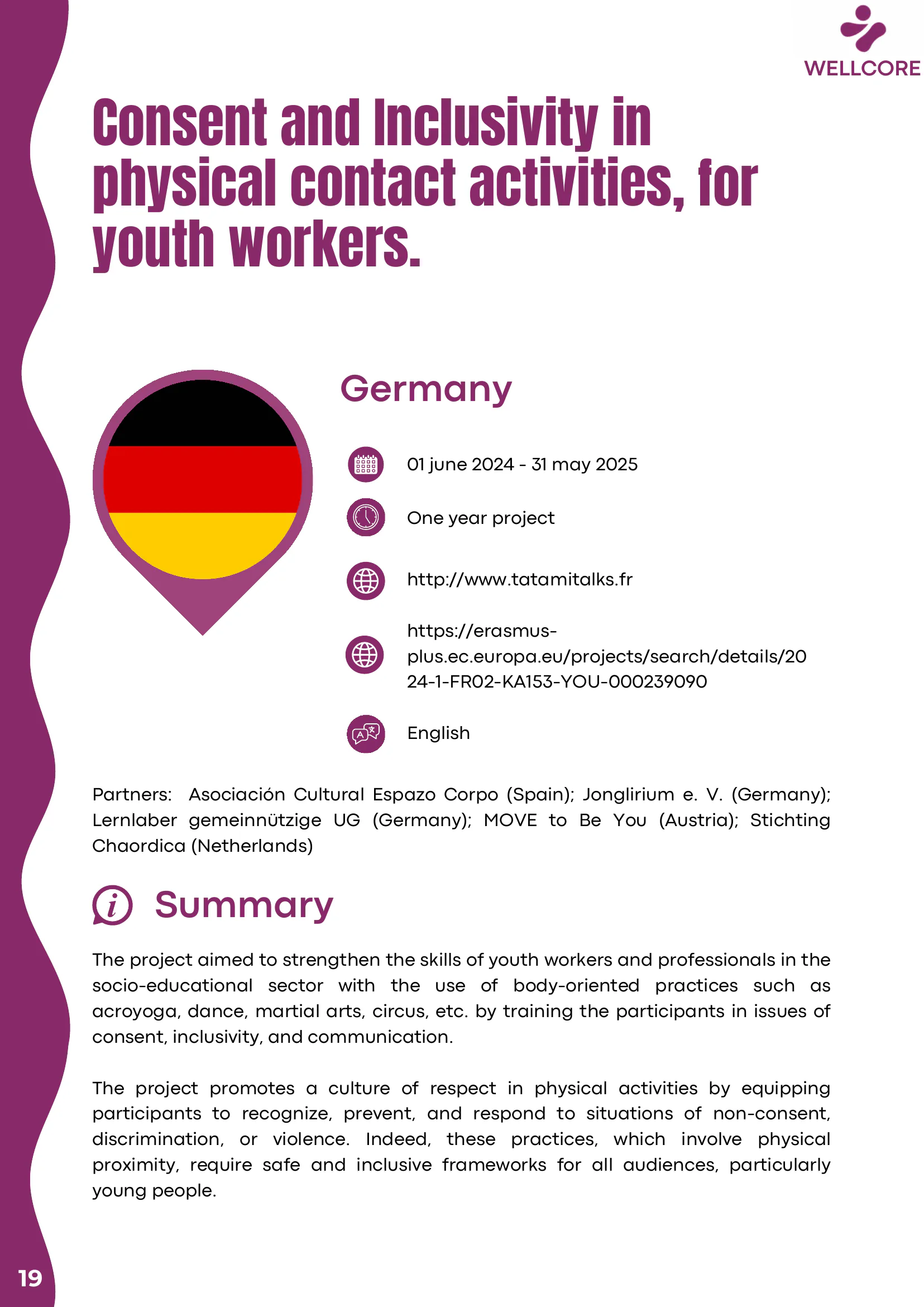
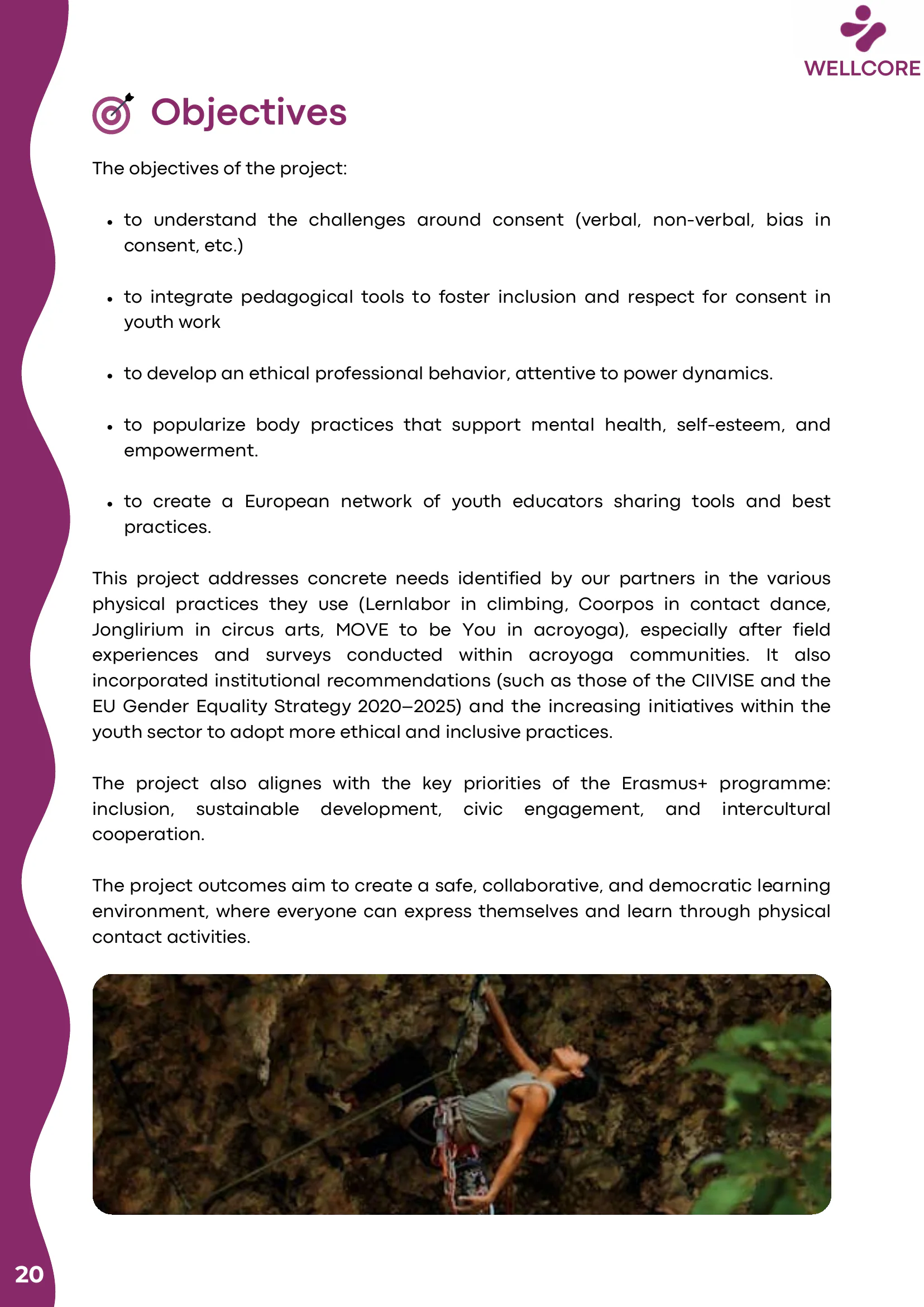
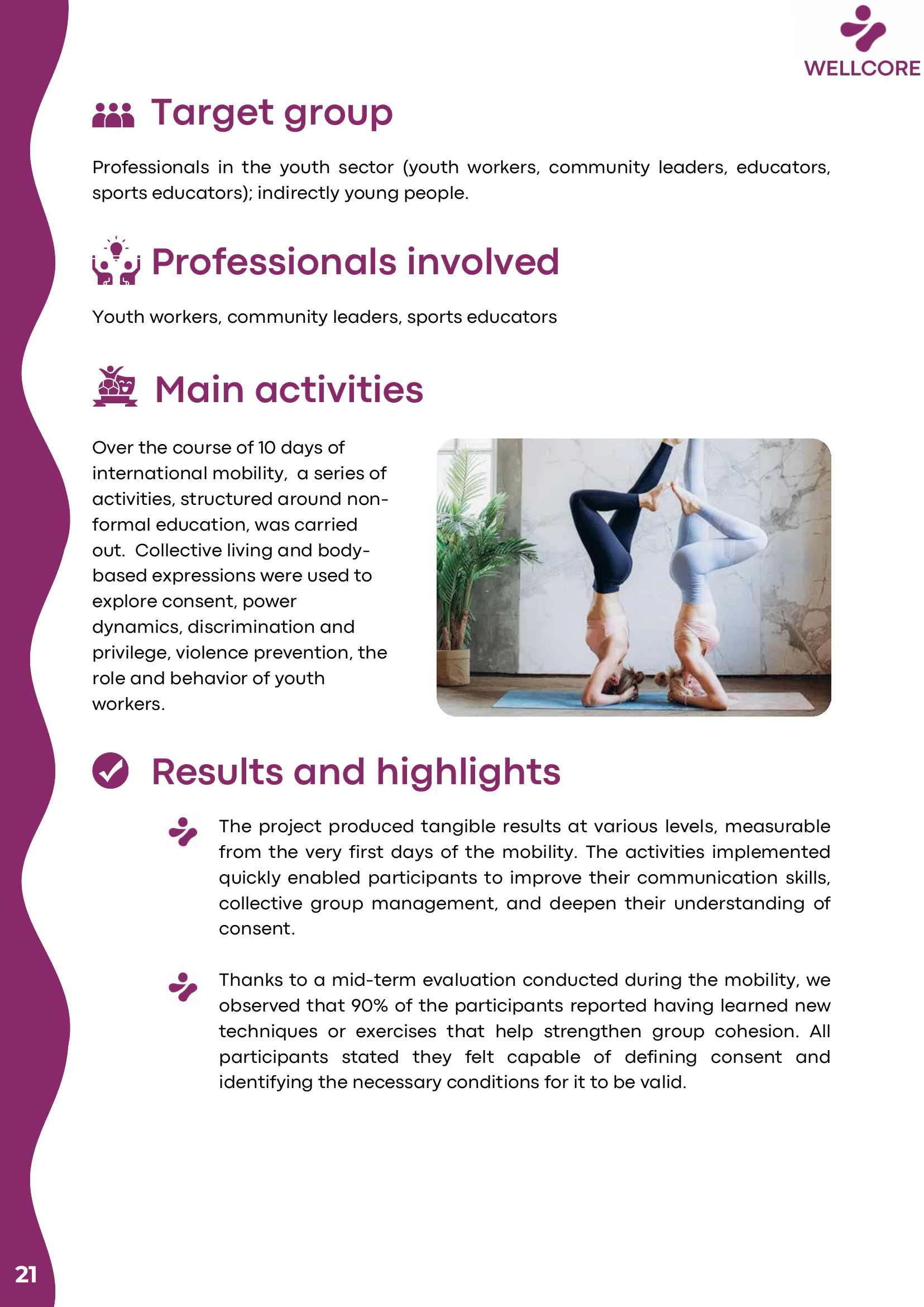
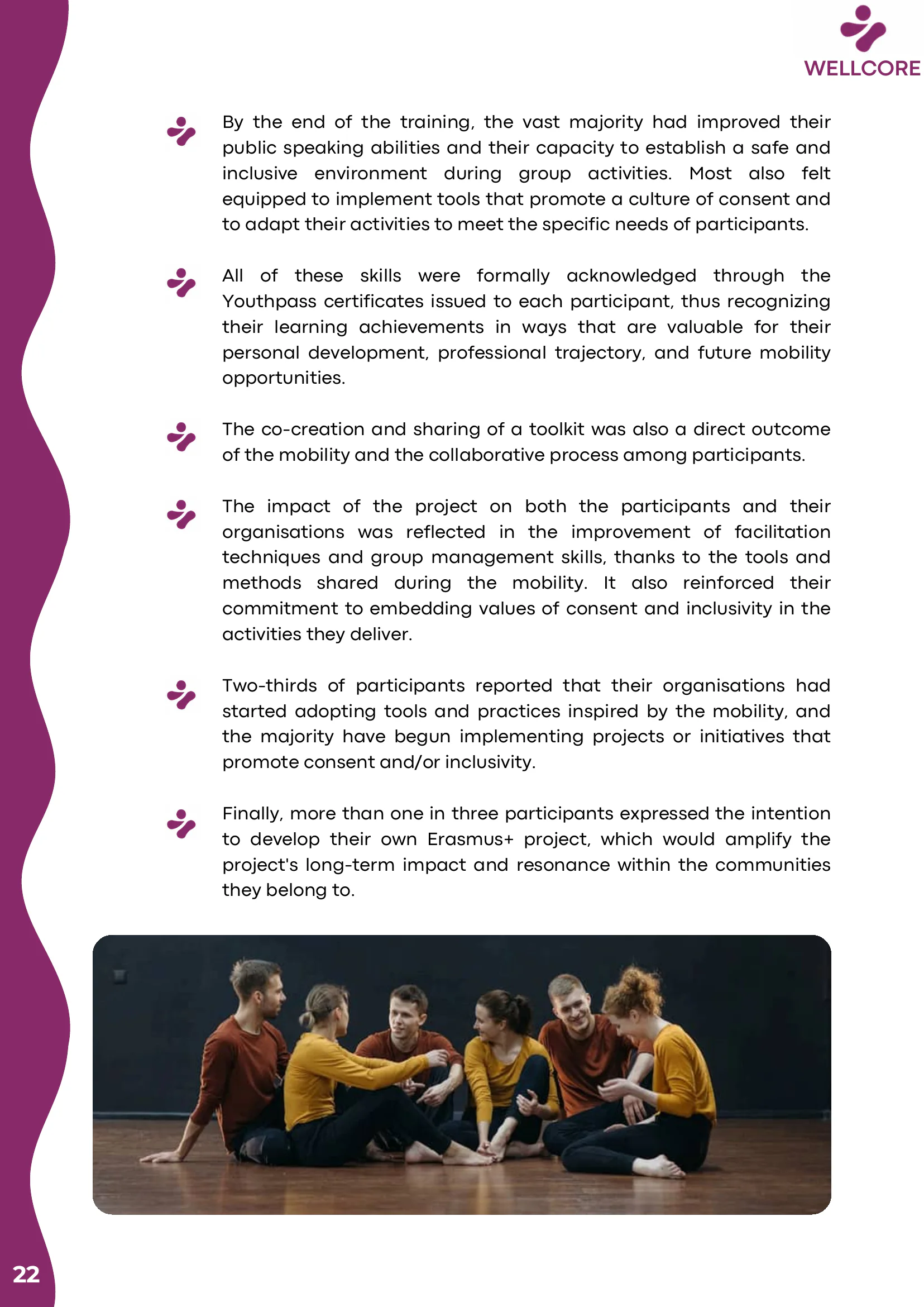
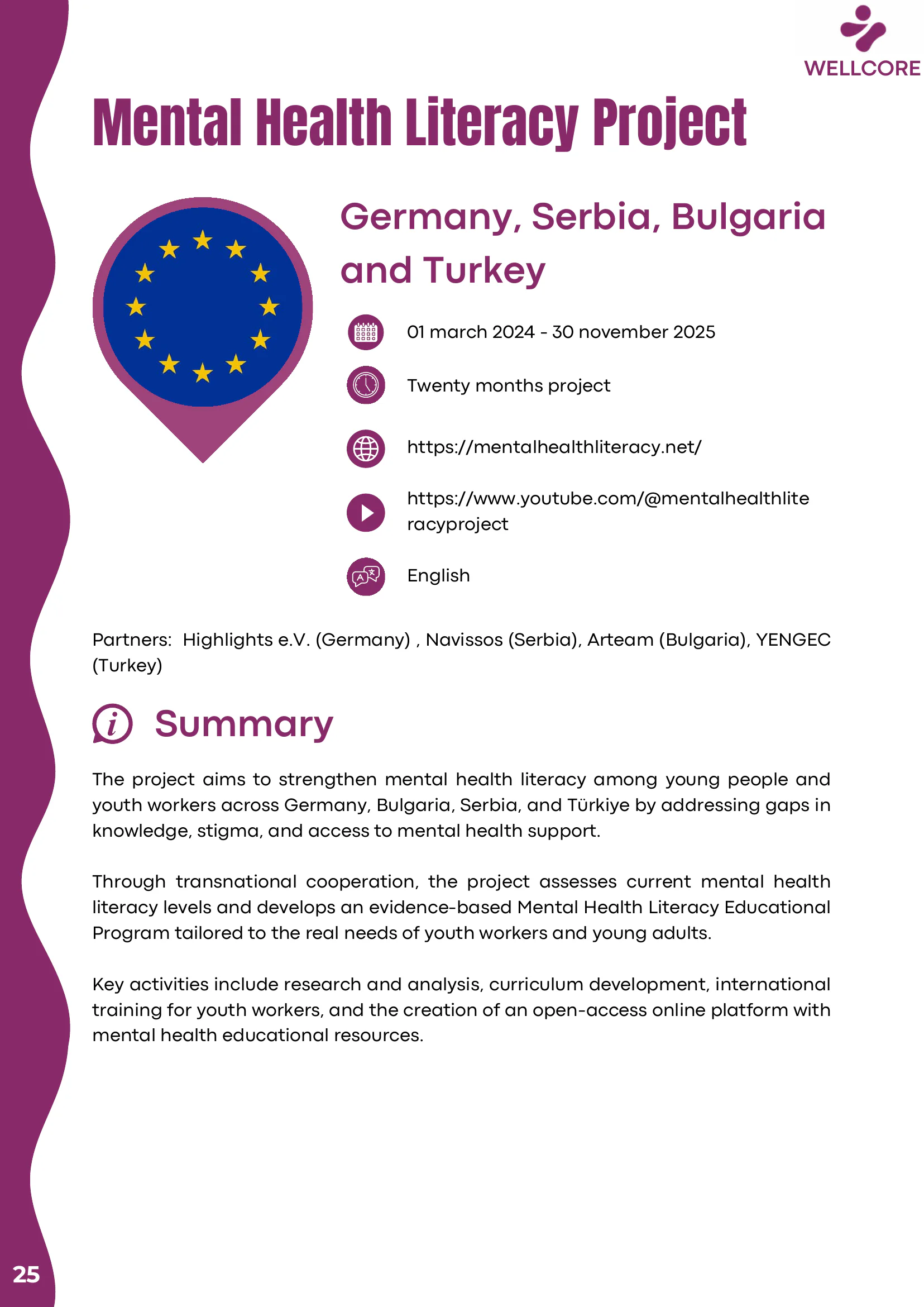
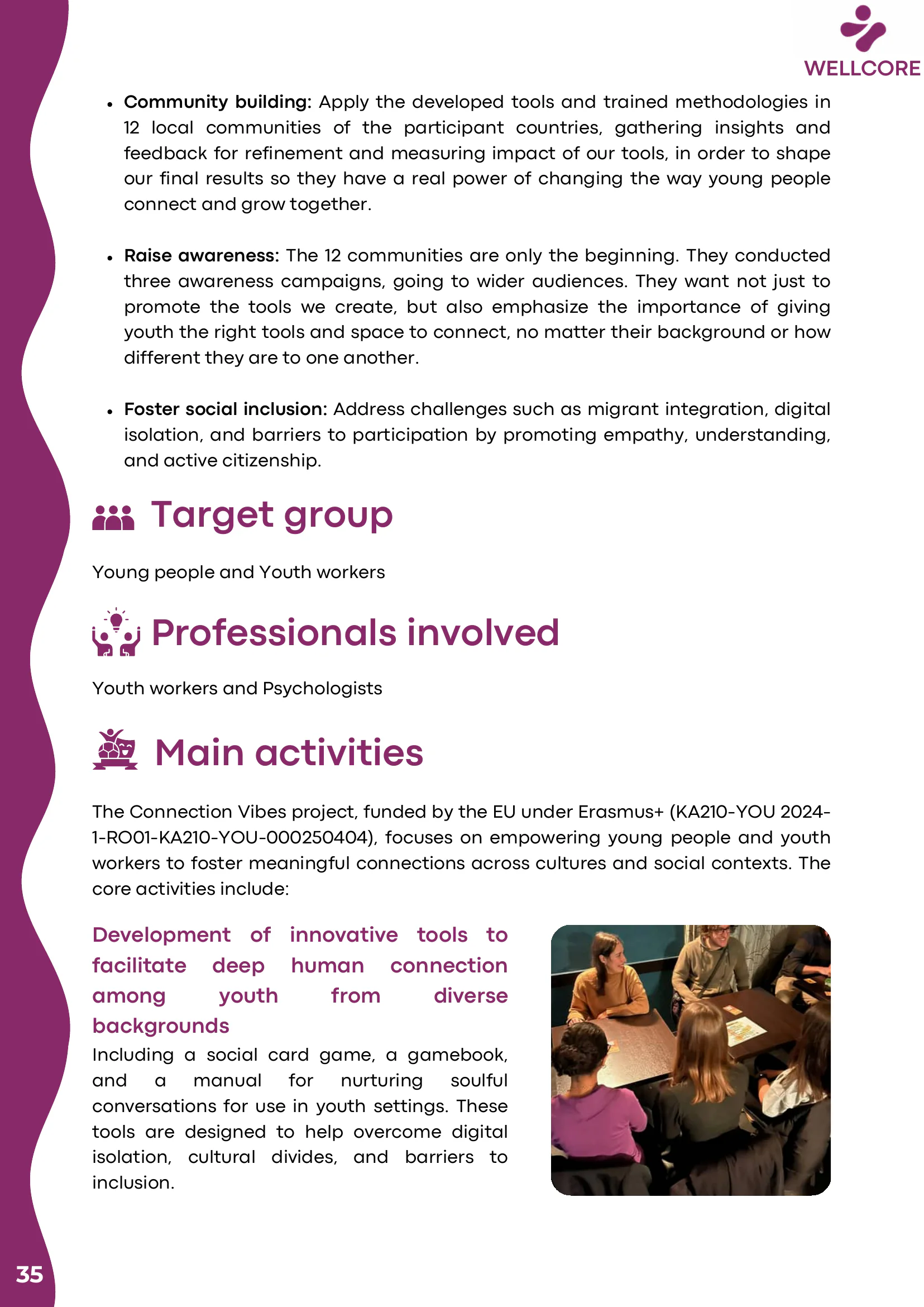
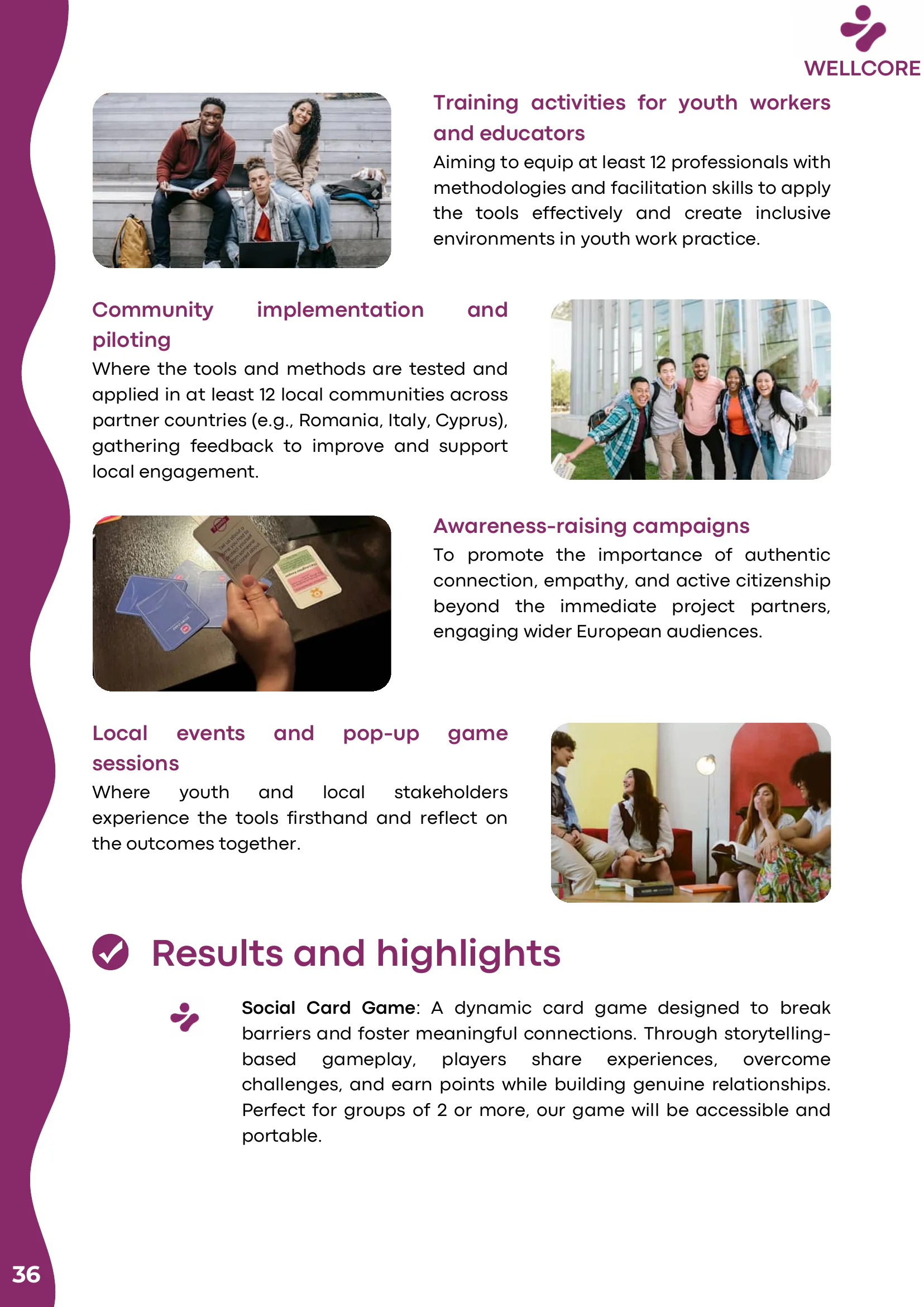
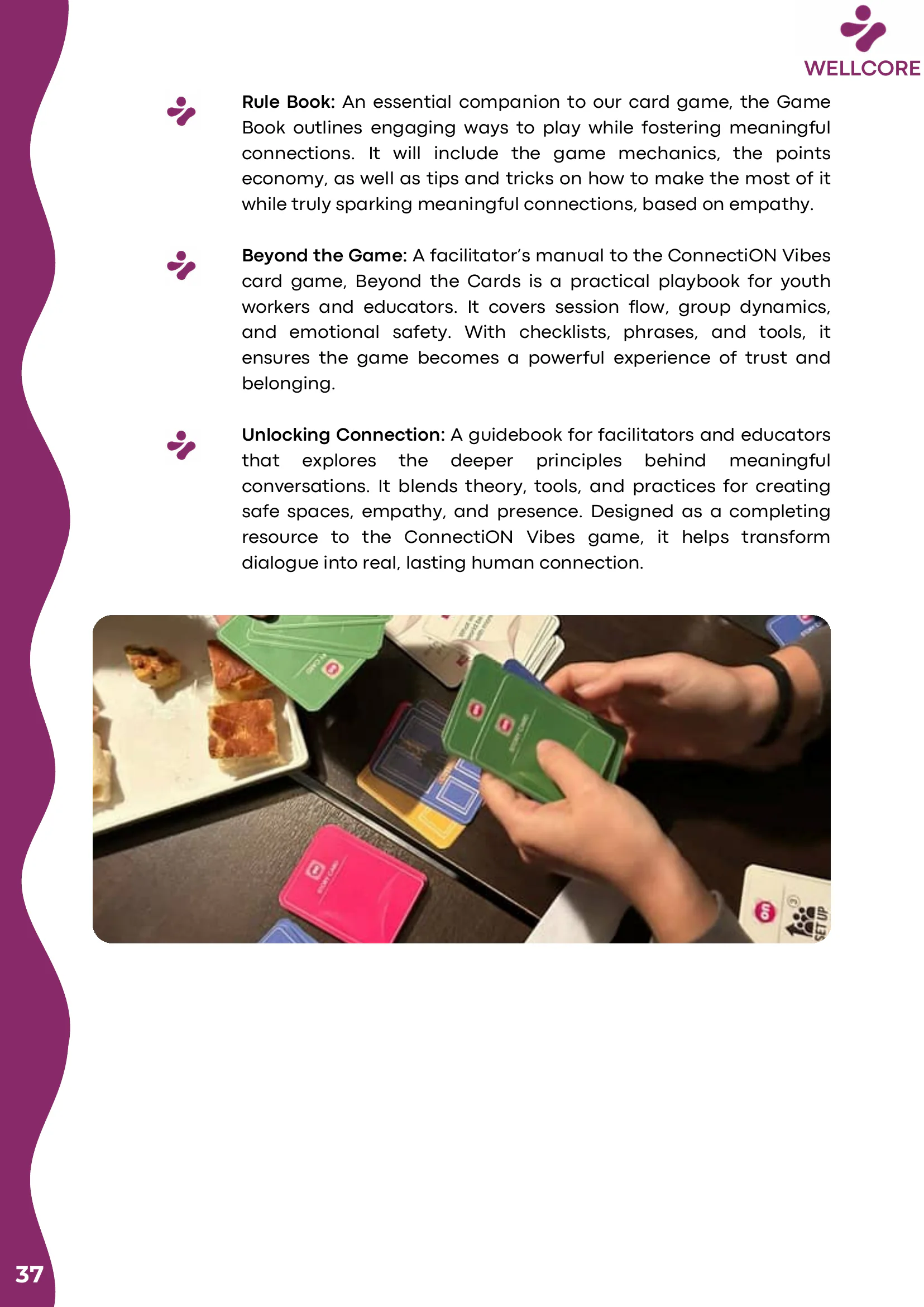
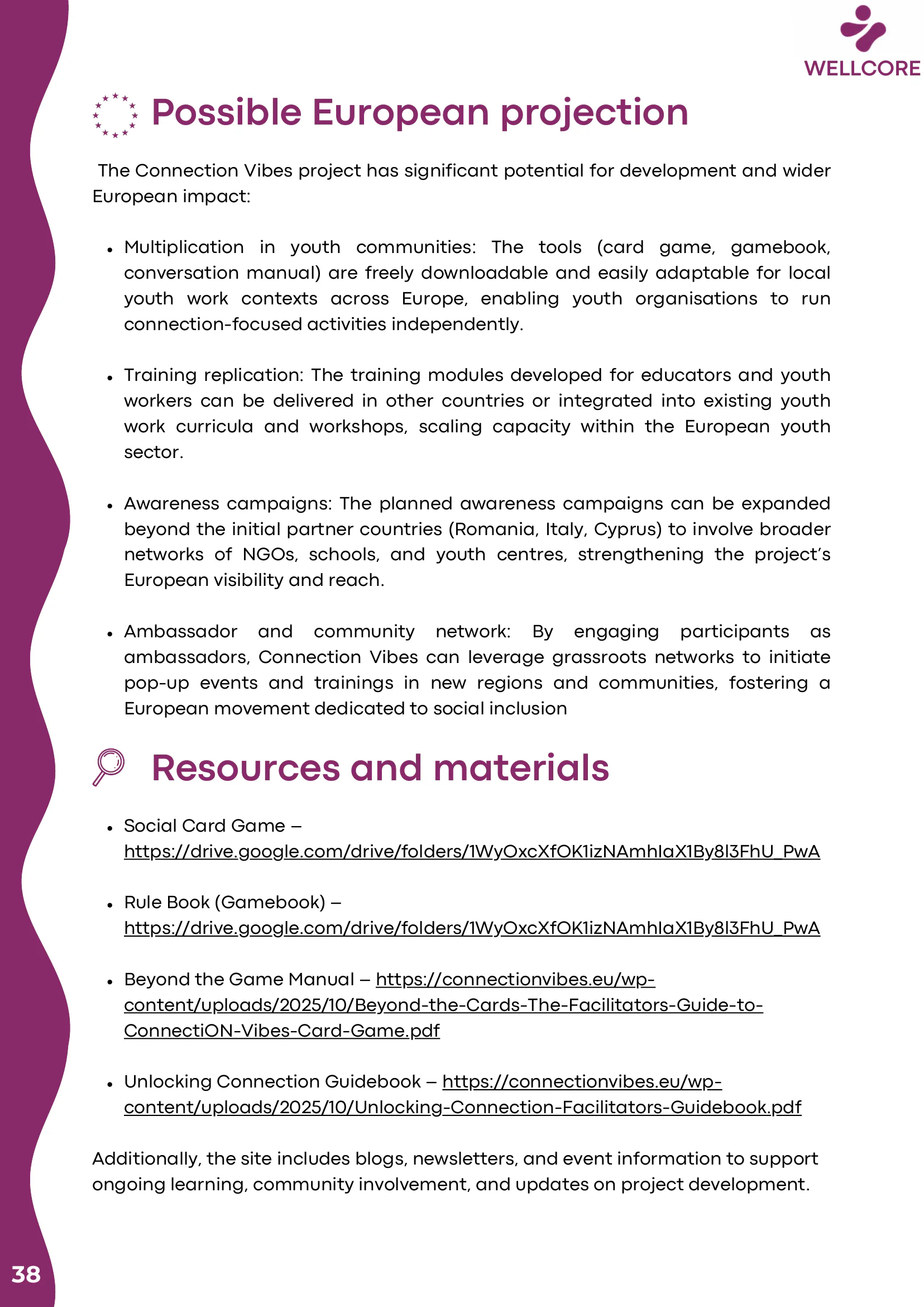
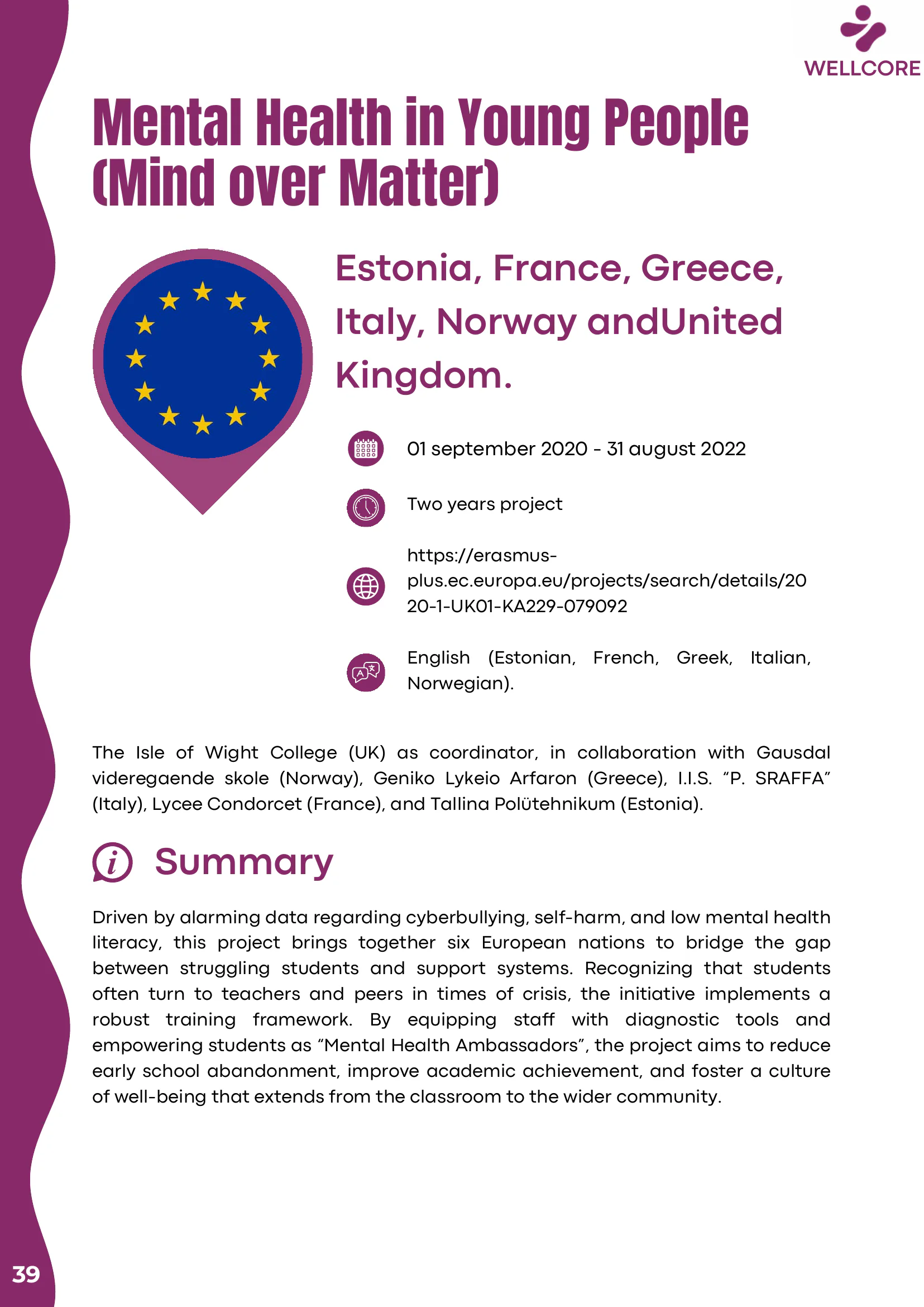
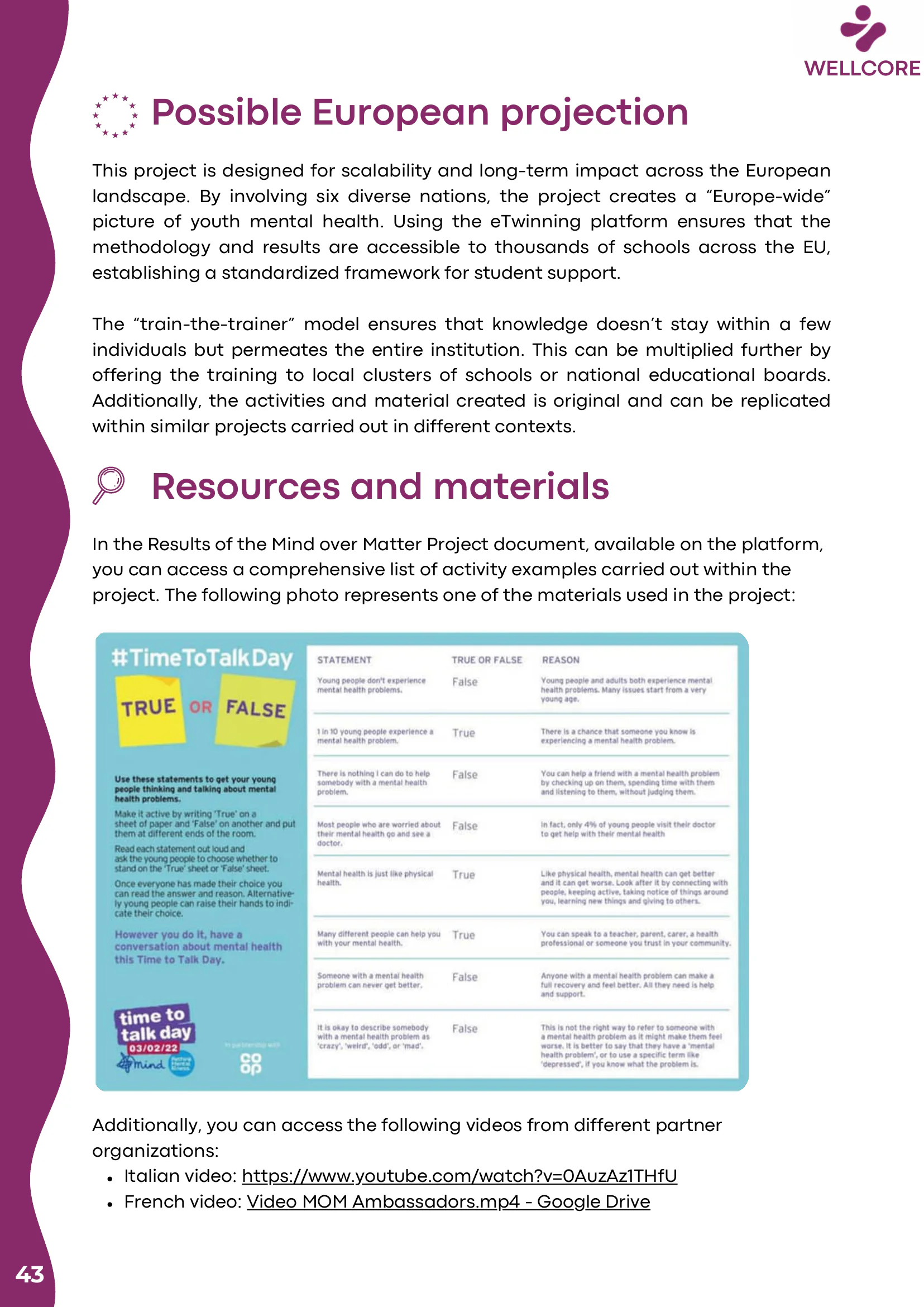
The nine practices are grouped in three parts. The national section covers a seminar on cultural welfare organised by the Regione Emilia-Romagna in Italy, the HIPPOCAMPUS yoga-based programme for young people in Spain, WomenBridges in Bulgaria, which supports the career paths of young women through dialogue and peer exchange, and a project on consent and inclusivity in body-oriented activities for youth workers in Germany. The European section covers the Mental Health Literacy Project, the Seminar on Youth Mental Health and Well-Being at the European Youth Centre in Strasbourg, the ConnectiON Vibes card game and facilitator materials, and the Mind over Matter project. The international section presents the Self-Care for Youth Workers initiative of the Youth Coalition of the ACT in Australia.
Each entry gives the practical details a reader needs to judge whether it fits their own work: where and when it took place, who coordinated it, its objectives and target group, the main activities, results, and links to resources and materials. Entries also describe how the practice could be adapted in other European contexts, so each one can be read on its own and used as a starting point for new work.
The PDF does not state a calendar publication date, so publishedDate is omitted rather than invented.